

Few children’s classics continue to live in the imagination quite like The Secret Garden.
More than a century after Frances Hodgson Burnett first published the novel in 1911, readers still return to it during periods of loneliness, exhaustion, grief, burnout, emotional transition, and quiet longing. Parents buy it for children. Adults reread it for comfort. Teachers continue teaching it. Collectors seek beautiful editions. Book clubs revisit it repeatedly.
And perhaps most interestingly of all, people continue asking the same kinds of questions.
Why does this story feel so emotionally restorative?
Why does the hidden garden matter so much?
Why do readers connect so strongly with Mary Lennox?
Is the novel really about healing?
Why does it still resonate with modern readers who live in such a different world?
The answers reveal something important about why The Secret Garden has endured while many once-popular classics have slowly faded from emotional relevance.
This is not simply a nostalgic children’s story.
It is a novel about neglected inner life.
And that remains deeply human.
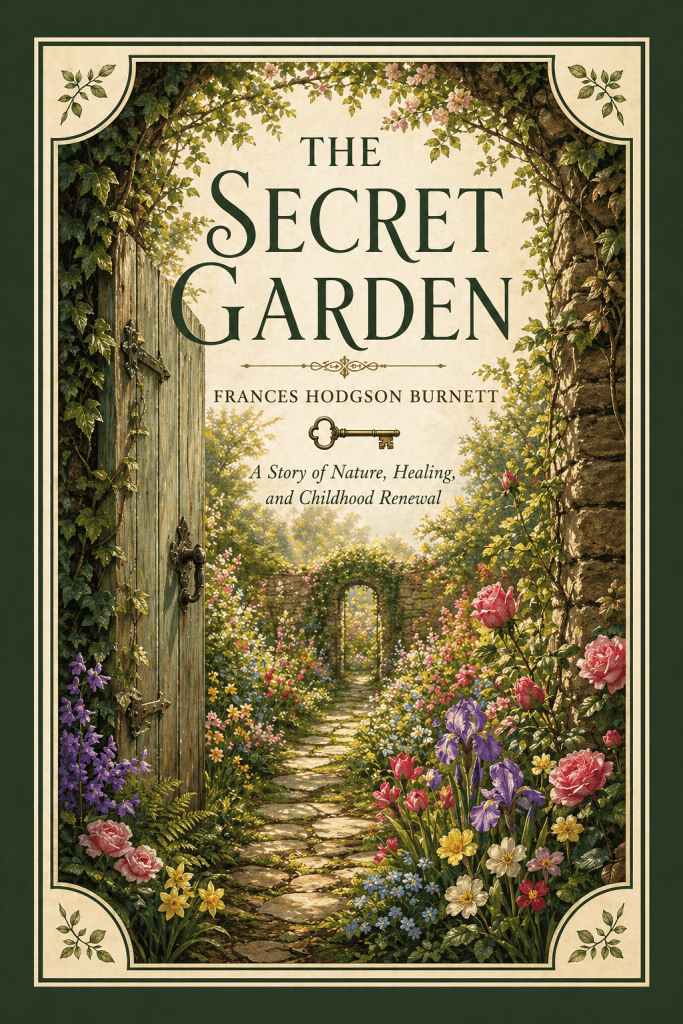
This article contains affiliate links to relevant editions on Amazon. As an Amazon Associate, Ginger Cat Publishing may earn from qualifying purchases.
Why Is Mary Lennox So Unpleasant at the Beginning?
One of the first things modern readers notice is that Mary is not immediately lovable.
She is rude, demanding, suspicious, self-absorbed, and emotionally closed off. Earlier generations sometimes described her simply as spoiled. Modern readers often see something more complicated.
Mary has not truly been parented.
At the beginning of the novel, she has grown up in colonial India surrounded by servants but deprived of warmth, emotional steadiness, and meaningful attention. People obey her, avoid upsetting her, and manage her practical needs, but almost nobody really knows her.
This matters.
Children who are emotionally neglected do not always become quiet and tragic. Sometimes they become difficult. Defensive. Angry. Hard to reach.
Part of what makes The Secret Garden still feel psychologically believable is that Burnett understands this instinctively. Mary’s unpleasantness is not presented as her deepest identity. It is presented as a symptom of emotional starvation.
Readers today often respond strongly to this aspect of the novel because it feels emotionally recognizable. The book quietly asks an enduring question:
What happens when a child has never been properly loved?
Why Does The Secret Garden Feel Emotionally Healing?
This may be the question modern readers ask most often.
People regularly describe The Secret Garden as comforting, restorative, calming, or even therapeutic. Yet the novel itself is filled with grief, loneliness, illness, fear, emotional withdrawal, and buried sorrow.
So why does it feel healing?
Partly because the story believes recovery is possible without pretending recovery is easy.
The novel does not offer dramatic rescue scenes or sentimental transformation. Instead, change happens slowly.
A child walks outside.
Another child laughs unexpectedly.
Someone begins sleeping better.
Fresh air returns colour to a face.
A neglected patch of earth begins growing again.
The emotional movement of the story feels believable because it happens through rhythm, routine, attention, and companionship rather than sudden revelation.
Modern readers often live inside overstimulation, speed, digital fatigue, and emotional fragmentation. The Secret Garden offers a very different emotional pace.
It suggests that restoration may begin quietly.
Not through perfection.
Not through instant transformation.
But through attention to living things.
What Does the Secret Garden Symbolise?
This is one of the most searched questions surrounding the novel.
The garden is many things at once.
It is a literal hidden place.
It is a private refuge.
It is a forgotten part of the estate.
But emotionally, the garden also represents neglected life waiting to return.
The garden has been locked away after grief made it too painful to visit. It has not died. It has simply been abandoned.
That emotional structure mirrors nearly every major character in the novel.
Mary has withdrawn emotionally.
Colin has been sealed away by fear and illness.
Archibald Craven has closed himself off after loss.
The house itself feels emotionally shuttered.
The garden becomes important because it is the first place where life begins returning naturally.
Not through force.
Not through lectures.
But through care.
Modern readers often respond powerfully to this symbolism because it reflects a deeply recognizable emotional experience: the feeling that parts of the self can become buried beneath grief, fear, exhaustion, or neglect.
The novel quietly suggests those parts may still be alive.
Why Is Nature So Important in The Secret Garden?
Nature in this novel is never merely decorative.
The flowers, weather, birds, soil, wind, seeds, and changing seasons are emotionally active parts of the story.
Burnett uses the natural world almost as a form of emotional language.
Mary begins changing when she starts noticing living things outside herself.
The robin leads her toward curiosity.
Gardening teaches patience.
The moor teaches openness.
Seasonal change becomes connected to emotional change.
For modern readers, this aspect of the book feels surprisingly contemporary. Discussions around mental wellbeing, outdoor life, gardening, slow living, and restorative contact with nature have only intensified in recent years.
This is one reason the novel fits so naturally into modern “cozy classic” and cottagecore reading culture.
But The Secret Garden is more emotionally grounded than many aesthetic interpretations suggest.
Nature here is not prettiness.
It is participation in life.
The children improve partly because they stop existing only inside their own fear and isolation.
They become connected to growth, weather, movement, and shared work.
Is Colin Really Ill?
This question continues to generate enormous discussion.
Modern readers often debate whether Colin’s illness is physical, psychological, exaggerated by adults around him, or some combination of all three.
The novel itself suggests a complicated mixture.
Colin has lived inside an atmosphere of fear from earliest childhood. He has been told repeatedly that he is weak, fragile, doomed, and possibly dying. Adults monitor him constantly. His body becomes inseparable from anxiety.
Modern readers frequently recognize something psychologically truthful here.
Fear can become physical.
Expectation can shape identity.
Isolation can intensify suffering.
At the same time, contemporary readers may also feel uneasy about parts of the novel’s treatment of illness and disability. Modern understandings are more nuanced than Edwardian ideas about health, willpower, exercise, and emotional recovery.
That tension is worth acknowledging thoughtfully.
Yet the emotional core of Colin’s story still resonates strongly.
The novel is deeply interested in what happens when a child stops imagining a future for himself.
And what happens when hope slowly returns.
Why Does the Story Still Resonate With Adults?
Many readers first encounter The Secret Garden as children.
Yet countless people discover that the novel affects them more deeply when they return to it later in life.
Partly this happens because adults notice the grief running beneath the story.
As children, readers often remember the mystery of the hidden key, the robin, the garden walls, and Colin’s dramatic transformation.
As adults, they often notice:
The emotional neglect.
The loneliness.
The exhausted adults.
The silence inside the house.
The way grief reshapes family life.
The longing for renewal.
Adult readers also tend to recognize the novel’s emotional patience.
The book never argues that people can simply think positively and become well. Instead, it suggests that vitality sometimes returns through repeated contact with care, movement, friendship, beauty, routine, and shared purpose.
That idea often feels more meaningful with age.
Why Does Dickon Feel So Beloved?
Few characters in classic children’s literature inspire as much uncomplicated affection as Dickon.
Part of his appeal comes from emotional steadiness.
Dickon does not dominate scenes.
He does not try to control people.
He notices.
He listens.
He accepts Mary without sentimentality.
He understands living things because he pays attention to them.
In a novel filled with emotional constriction, fear, secrecy, and tension, Dickon represents openness.
Readers often experience him almost as an emotional climate rather than merely a character.
He carries warmth into the story without forcing it.
Is The Secret Garden Problematic?
Modern readers increasingly ask difficult but important questions about the novel.
How should we think about the colonial India opening?
What assumptions about class and empire shape the story?
How does the novel approach illness and disability?
These questions matter.
The Secret Garden emerged from a specific historical world shaped by British imperial power, rigid social hierarchy, and Edwardian attitudes that modern readers may reasonably critique.
The novel’s portrayal of India is limited and filtered through colonial assumptions. Servant relationships reflect class structures that were deeply unequal. Some aspects of the book’s treatment of illness may also feel uncomfortable to contemporary audiences.
Acknowledging this context does not require rejecting the novel entirely.
One reason the book continues to endure is that readers often experience two truths at once:
The novel contains historical limitations.
And the novel also contains deep emotional insight.
Thoughtful reading allows space for both.
Why Do Readers Find the Hidden Garden So Powerful?
Hidden gardens appear repeatedly in literature, folklore, dreams, and imagination because they combine several enduring human desires.
Privacy.
Safety.
Discovery.
Beauty.
Renewal.
The garden in Burnett’s novel is especially powerful because it does not begin as paradise.
It begins as a place connected to grief.
The children do not discover a perfect magical world untouched by sorrow. They rediscover a place abandoned because sorrow became unbearable.
That emotional complexity matters.
The garden becomes meaningful because life returns there despite loss.
Not because loss never existed.
Why Does The Secret Garden Still Matter in 2026?
Because loneliness still exists.
Because children still need attention.
Because grief still reshapes families.
Because people still lose contact with vitality.
Because many modern readers quietly long for slowness, beauty, friendship, and emotional renewal.
And because the novel offers hope without emotional dishonesty.
More than a century after publication, The Secret Garden still speaks to readers who feel emotionally tired, shut away, uncertain, overstimulated, or inwardly disconnected.
Its lasting power does not come from nostalgia alone.
It comes from the quiet possibility at the centre of the story:
That neglected life may not be dead.
That hidden things may bloom again.
And that recovery sometimes begins with something as small as opening a door.
Explore Our Reader’s Edition
Ginger Cat Publishing’s edition of The Secret Garden: A Quiet Journey into Courage and Belonging has been thoughtfully prepared for modern readers seeking a calm, beautiful, emotionally intelligent reading experience.
Designed for adult return readers, families, collectors, and gift buyers, the edition includes reflective companion material exploring the novel’s emotional atmosphere, historical context, enduring relevance, and restorative themes.
For readers searching for:
- a children’s classic about nature and friendship
- healing childhood fiction with gentle themes
- an orphan girl countryside coming of age novel
- an Edwardian children’s literature gift edition
- a nostalgic literary gift for nature lovers
- or a beautiful collectible childhood classic novel
The Secret Garden remains one of the most quietly transformative books ever written.