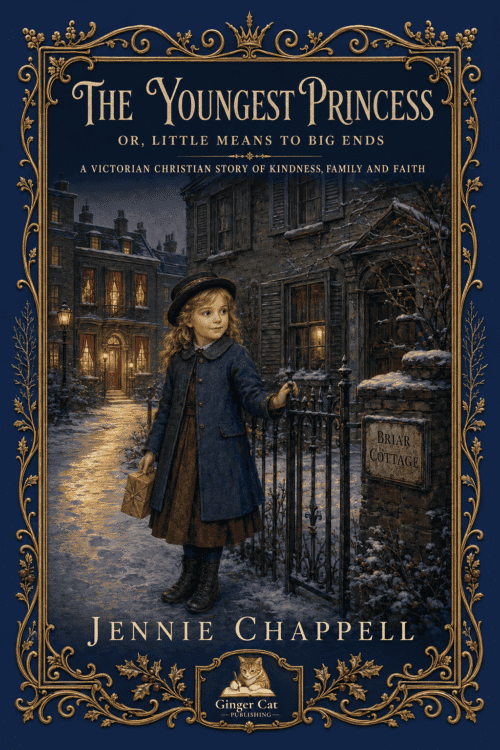

This Ginger Cat Publishing edition includes:
- An introduction and a note about this edition
- Historical context and a biography of Lucy Ellen Guernsey
- Reflections for modern readers and twenty discussion prompts
Four children. The wrong train. A Christmas none of them had planned.
Frank Landon is certain he knows the way home. Travelling with his younger brother Edward, his schoolfriend Herbert and Herbert’s adopted sister Agatha, he confidently takes charge of their Christmas journey. But he has overlooked one important detail. Before long, the children discover that their train is carrying them away from the party, presents and familiar welcome they expected.
Outside the carriage, snow is falling more heavily. What began as an embarrassing mistake becomes a far more troubling prospect as the railway struggles against the storm. Frank can endure missing the festivities. It is harder to bear the thought that his certainty has brought discomfort and anxiety to people who trusted him.
Then an unexpected invitation brings the stranded travellers to Cedar Hill. There is a warm room, a generous supper and a household willing to make space for strangers. As the company settles around the fire, one story leads to another, and the evening begins to take a shape no one could have arranged beforehand.
A dangerous winter ride, a woman’s plans for a new carpet, a boy’s longing to escape his home and a lonely Thanksgiving all become part of the conversation. Some experiences are frightening, others quietly revealing. Together they raise questions about pride, practical kindness, forgiveness and the difference between imagining an adventure and living through it.
Among the listeners is thirteen-year-old Agatha, whose quiet manner conceals a history of loss and separation. For her, the companionship of the gathering has a particular tenderness. Yet every member of the company brings something that cannot be guessed from a first impression, and listening becomes as important as telling.
Originally published in 1869, Christmas at Cedar Hill combines a connected Christmas narrative with several tales shared by its characters. Its seasonal pleasures include sleigh journeys, shared meals, presents and music, while the stories reach beyond Christmas into other places and remembered years. Readers who enjoy older family fiction will find both lively conversation and moments that invite a slower, more reflective response.
Christian faith is integral to the book. Prayer, Scripture, repentance and trust in God’s providence shape how its people understand their experiences. Its Episcopal setting includes worship, confirmation and Holy Communion, alongside a persistent concern with what belief asks of us in our treatment of others. The welcome offered to a stranger and the help given to a struggling neighbour matter here as much as the words spoken about generosity.
This edition places the original story alongside companion material exploring its setting, author and continuing questions. The historical discussion also addresses racial stereotypes, colonial assumptions and harsh attitudes towards discipline. The text contains bereavement and cruelty towards children; adults considering it for younger readers may wish to read ahead.
For readers drawn to Christian classics, fireside storytelling and the unexpected possibilities of an interrupted journey, Cedar Hill offers a place to pause and listen.