
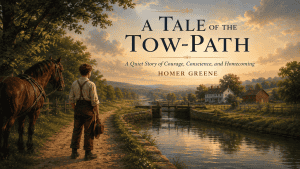
This article contains affiliate links to relevant editions on Amazon. As an Amazon Associate, Ginger Cat Publishing earns from qualifying purchases.
For many modern readers, beginning to explore classic literature can feel strangely intimidating. There is often a quiet worry beneath the curiosity. Will the language feel difficult? Will the story move too slowly? Will the book feel emotionally distant from modern life?
In the case of A Tale of the Tow-Path by Homer Greene, the answer is reassuringly simple.
Yes, it is an unusually approachable classic for beginners.
Not because it is shallow or simplistic, but because it carries its emotional concerns gently and clearly. It does not demand specialist literary knowledge. It does not overwhelm the reader with dense prose or elaborate symbolism. Instead, it offers something many readers quietly long for when returning to older literature: warmth, clarity, atmosphere, and recognisable human feeling.
There is also something deeply calming about the book’s scale. It is a story about one frightened fourteen-year-old boy, a family conflict, a stolen horse, and the long emotional road back toward trust. The stakes matter deeply to the characters, but the novel never becomes emotionally exhausting. It leaves room to breathe.
For readers curious about classic literature but uncertain where to begin, that matters more than people sometimes realise.
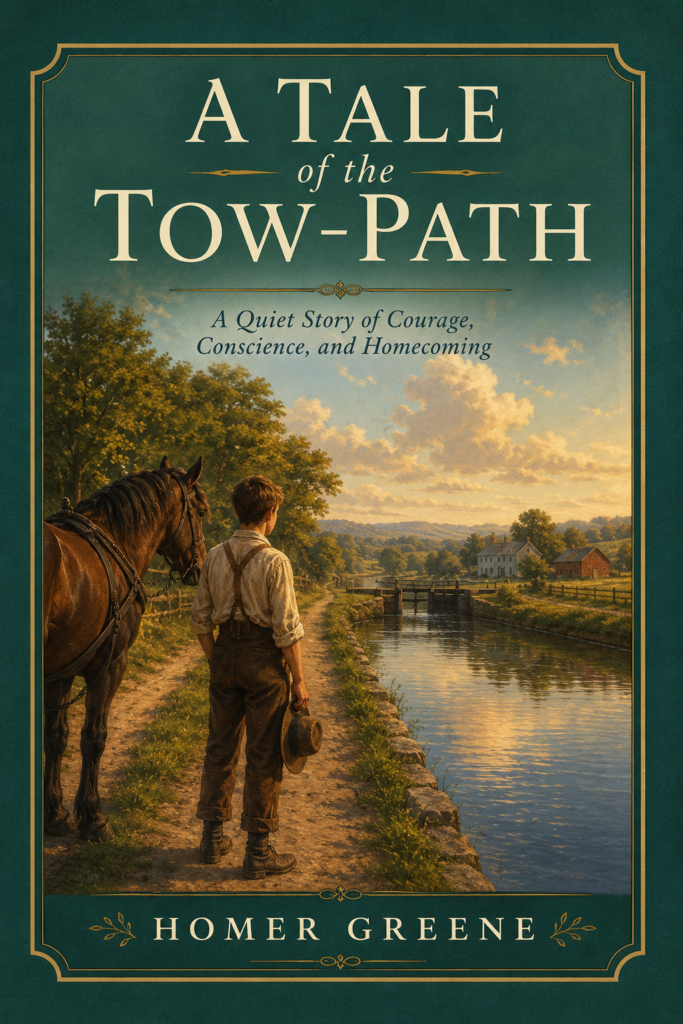
This article contains affiliate links to relevant editions on Amazon. As an Amazon Associate, Ginger Cat Publishing may earn from qualifying purchases.
A Classic That Feels Human Rather Than Monumental
One reason many readers struggle with classics is that they begin with books that arrive carrying enormous cultural weight. Sometimes this creates unnecessary pressure. Readers feel they are supposed to admire the book before they have even settled into it.
A Tale of the Tow-Path does not approach the reader like that.
It feels smaller, quieter, and more companionable from the beginning. Homer Greene is not trying to astonish us with literary grandeur. He is telling a humane story about shame, anger, labour, misunderstanding, and reconciliation within a rural Pennsylvania canal community.
That modesty becomes part of the novel’s charm.
Joe Gaston runs away after being harshly punished at home, convinced that escape will somehow free him from humiliation and hurt. Instead, he finds himself moving through the working world of canal tow-paths, horses, labourers, and strangers while gradually confronting his own fears and responsibilities.
Even modern readers who know almost nothing about nineteenth-century American life tend to understand Joe emotionally very quickly. That emotional accessibility makes the book surprisingly welcoming.
The Language Is Older, But Not Difficult
This is often the first practical question readers ask about older fiction.
Will it be hard to read?
Compared to many nineteenth-century novels, A Tale of the Tow-Path is remarkably readable. The prose is direct and clear. Sentences are generally shorter and less structurally complex than readers encounter in writers such as Charles Dickens or Herman Melville.
The vocabulary occasionally reflects its period, but rarely in ways that create serious barriers to understanding.
Part of this accessibility comes from the book’s original audience. Greene was writing juvenile fiction, which meant the story needed to remain emotionally engaging and understandable for younger readers. Yet unlike some older children’s literature, the novel does not feel excessively childish to adults.
Instead, it occupies a pleasant middle ground.
Adult readers can appreciate its emotional intelligence and historical atmosphere, while younger or newer readers can still move through the story comfortably.
For many people, this makes it an ideal “bridge classic.” It helps readers grow more comfortable with nineteenth-century prose without demanding immediate mastery of denser literary styles.
The Canal Setting Gives the Book Its Atmosphere
One of the most quietly memorable aspects of the novel is its setting.
The canal tow-path world feels very different from the environments most modern readers know. Horses pull boats along narrow waterside paths. Travel happens slowly. Small communities depend closely upon one another. Weather and labour shape daily rhythms.
Yet this unfamiliar world never feels alien.
Greene writes the landscape with calm familiarity rather than heavy historical explanation. Readers absorb the atmosphere naturally while following Joe’s journey. The canal becomes more than scenery. It creates the emotional rhythm of the novel itself.
Everything moves slowly enough for reflection.
This slower pace can initially surprise readers accustomed to modern storytelling built around constant escalation. But many people discover that older books like this offer something modern fiction sometimes forgets to provide: emotional spaciousness.
The novel allows moments to settle.
Joe’s embarrassment lingers. Loneliness takes time to unfold. Kindness arrives gradually and often quietly. Even the mystery surrounding the stolen horse develops with steady patience rather than dramatic spectacle.
For beginners exploring classics, this can become an unexpectedly rewarding experience.
It Helps Readers Discover That Older Books Are Not Emotionally Dead
Many people carry an unconscious assumption that older literature will feel emotionally remote. Historical distance can create the impression that people in the nineteenth century somehow experienced life less vividly or less recognisably than we do now.
A Tale of the Tow-Path gently disproves that idea.
Joe’s emotional world feels startlingly familiar at times. He feels ashamed. Angry. Defensive. Lonely. He wants to escape humiliation. He fears being misunderstood. He longs for acceptance even while pulling away from it.
Those emotions have not disappeared simply because the world around them has changed.
One of the quiet pleasures of reading approachable classics is discovering emotional continuity across generations. People travelled differently. Worked differently. Spoke differently. But fear, pride, longing, resentment, and hope remain recognisably human.
This emotional familiarity often becomes the moment when newer readers realise classics are not merely educational exercises. They are still living emotional experiences.
The Book Is Gentle Without Becoming Bland
Some readers hear the phrase “gentle classic” and worry the story will feel emotionally flat or uneventful.
That is not really the case here.
There is genuine narrative momentum beneath the novel’s calm surface. Joe’s disappearance becomes entangled with suspicion surrounding a stolen horse, and the tension this creates gives the story shape and movement.
At the same time, Greene avoids sensationalism.
The novel remains more interested in emotional consequences than dramatic spectacle. The real centre of the story is not the mystery itself, but the gradual movement toward understanding and reconciliation.
For readers tired of aggressively paced modern storytelling, this can feel quietly restorative.
The novel trusts smaller emotional shifts to matter.
It Is Also Short Enough Not to Feel Overwhelming
Length matters more than literary culture sometimes admits.
A beginner reader may admire the idea of reading a vast nineteenth-century novel while still feeling intimidated by the practical reality of hundreds of dense pages.
A Tale of the Tow-Path avoids this problem entirely.
It is compact enough to feel manageable while still offering the immersive satisfaction of a complete emotional journey. Readers can finish it without feeling trapped inside an endless literary obligation.
This creates confidence.
And confidence matters enormously when building a relationship with classic literature.
Many lifelong readers of older books begin not with intimidating masterpieces, but with one approachable story that quietly showed them classics could still feel alive.
The Moral Tone May Feel Different to Modern Readers
It is important to acknowledge that the book reflects the values of its period.
Nineteenth-century juvenile fiction often placed greater emphasis on obedience, discipline, and moral growth than contemporary children’s literature does today. Some readers may find aspects of Joe’s punishment or the surrounding social expectations uncomfortable.
But Greene’s novel also contains more emotional nuance than modern readers sometimes expect from older moral fiction.
Joe is not treated simply as a “bad child” needing correction. The novel recognises hurt on multiple sides. Adults are imperfect. Fear and misunderstanding shape behaviour. Emotional repair matters just as much as responsibility.
Approaching the book historically rather than defensively often creates a richer reading experience.
The novel becomes not a moral lecture from the past, but a window into how earlier generations tried to understand family tension, conscience, and reconciliation.
Who Is This Book Especially Good For?
Certain readers are especially likely to connect with A Tale of the Tow-Path today.
Readers curious about classics but nervous about difficulty levels often find it welcoming.
People who enjoy reflective, emotionally grounded fiction rather than highly dramatic storytelling may appreciate its calm sincerity.
Readers interested in vanished historical worlds often become absorbed by the canal setting itself.
And adults revisiting childhood themes from a gentler emotional distance may find the novel unexpectedly moving.
It also works beautifully for readers who enjoy books like The Adventures of Tom Sawyer or quieter rural coming-of-age fiction such as Rebecca of Sunnybrook Farm, though Greene’s tone is generally softer and more restorative.
A Quiet Doorway Into Classic Literature
Perhaps the best way to describe A Tale of the Tow-Path is this:
It feels like a welcoming doorway rather than a literary test.
The novel does not ask readers to perform sophistication. It simply invites them into another world and trusts ordinary human emotions to carry the story forward.
That invitation still matters.
Especially now, when so much modern reading culture feels hurried, performative, or aggressively optimised for speed and intensity.
There is something quietly refreshing about a book willing to move at the pace of water, horses, weather, and gradual emotional understanding.
And perhaps that is one reason beginners often respond warmly to older books like this once they finally encounter them. Beneath the historical setting and unfamiliar details, they discover something unexpectedly recognisable.
Not perfection. Not nostalgia.
Just people trying, imperfectly, to find their way back toward one another.
Explore the Ginger Cat Publishing Edition
Our Ginger Cat Publishing edition of A Tale of the Tow-Path has been thoughtfully prepared for modern readers seeking an approachable and immersive classic reading experience.
The edition features clear, comfortable formatting, calm page design, and reflective companion material exploring canal-era life, the emotional atmosphere of the novel, and the enduring themes that continue to resonate today.
Created with readability and quiet literary companionship in mind, this edition is designed not simply to reproduce the text, but to help modern readers settle naturally into its world.
You can explore the Ginger Cat Publishing edition on Amazon and rediscover this gentle American classic for yourself.