

There are some classic novels that survive mostly because they are historically important. People admire them, study them, and occasionally feel guilty for not finishing them.
Then there are books like Pride and Prejudice.
Books people return to willingly.
Books readers revisit at different stages of life and somehow find waiting for them each time with new meaning. Books that continue to feel strangely alive, even when the world around them has changed beyond anything the author could have imagined.
That is part of what makes Jane Austen’s novel feel so timeless. It is not timeless because it ignores human flaws, but because it understands them so clearly.
Long before smartphones, dating apps, social media, or modern relationship advice, Austen was already writing about awkward conversations, bruised pride, social pressure, emotional misunderstanding, family embarrassment, attraction mixed with irritation, and the uneasy feeling of wondering whether we have judged somebody too quickly.
The clothes may have changed. The emotional experience has not.
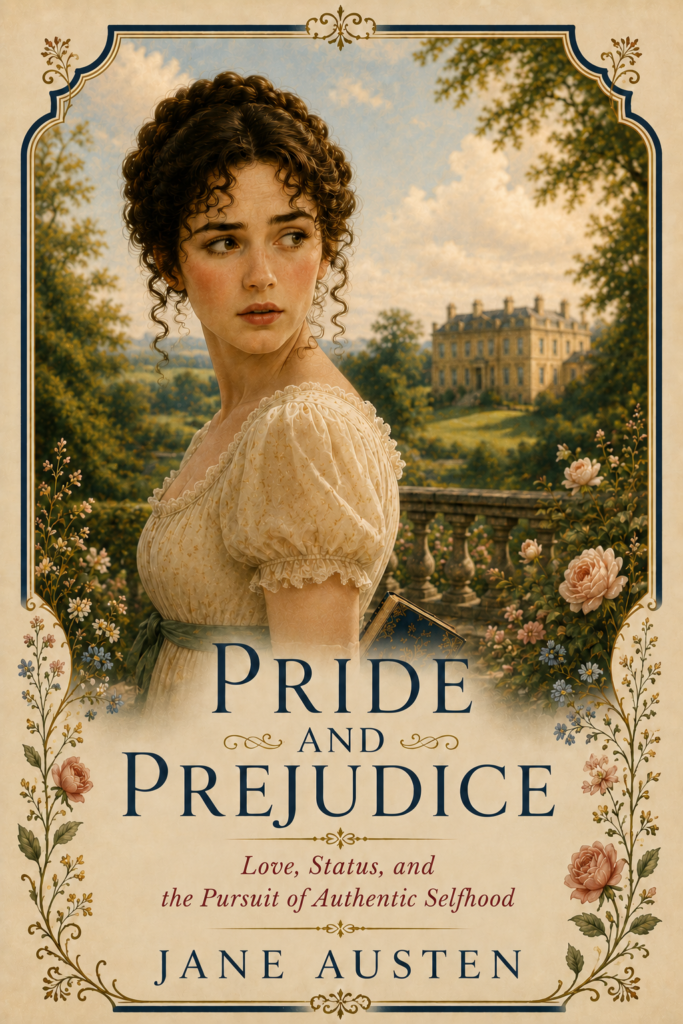
This article contains affiliate links to relevant editions on Amazon. As an Amazon Associate, Ginger Cat Publishing may earn from qualifying purchases.
The Characters Still Feel Human
One of the easiest ways for older books to feel distant is when the characters stop feeling emotionally believable. Sometimes people in classic fiction can seem more symbolic than real, existing mainly to teach lessons or move the plot forward.
That is not what happens in Pride and Prejudice.
Elizabeth Bennet still feels recognisable because she is intelligent without being perfect. She is perceptive, but also proud of her own judgement in ways that quietly blind her. She can read people well until emotion gets involved. She values independence, but she also enjoys being thought clever. There is warmth in her, but also stubbornness.
In other words, she feels human.
Mr Darcy works for similar reasons. Beneath all the cultural mythology surrounding him, Austen presents somebody socially awkward, emotionally restrained, uncomfortable in unfamiliar settings, and deeply poor at expressing vulnerability. His pride is real, but so is his sincerity.
Readers often remember the romance, but what gives the relationship emotional weight is that both characters must confront themselves before they can truly understand each other.
That idea still resonates deeply today.
Not because modern readers live in Regency England, but because self-knowledge remains difficult.
Austen Understands First Impressions
The title itself quietly reveals one of the novel’s deepest themes.
Pride. Prejudice.
Not villainy and innocence.
Not good people and bad people.
Simply human beings misreading one another.
Part of the novel’s enduring relevance comes from how accurately Austen captures the speed with which people form opinions. Characters constantly interpret each other through limited information, social assumptions, rumours, wounded feelings, and personal bias.
Readers recognise this instinctively because modern life still works the same way.
We still:
- assume confidence means arrogance
- mistake awkwardness for coldness
- trust charm too quickly
- judge people through social reputation
- interpret others through our own insecurities
Austen never treats these flaws with cruelty. That is part of her genius. Her humour is sharp, but it is rarely heartless.
She seems deeply aware that human beings are often ridiculous while also being worthy of compassion.
That balance gives the novel much of its warmth.
The Social Pressure Still Feels Familiar
At first glance, the world of Pride and Prejudice can seem far removed from modern life.
Formal dances. Inherited estates. Marriage prospects discussed in drawing rooms.
Yet beneath the surface, the emotional pressures remain surprisingly familiar.
The Bennet sisters live in a world where security is uncertain and reputation matters enormously. Marriage is not treated purely as romance because, for women of their social position, financial stability and future survival are tied closely to it.
Modern readers may not face the same exact circumstances, but many still understand:
- pressure to “settle down”
- anxiety about status
- fear of making poor relationship choices
- family expectations
- social comparison
- the exhausting performance of appearing successful or desirable
Charlotte Lucas remains one of Austen’s most quietly devastating characters precisely because her decisions feel understandable.
She does not marry for romance. She marries for stability.
Austen does not fully condemn her for this. Nor does she entirely celebrate it. Instead, she allows readers to sit with the uncomfortable reality that practical survival and emotional fulfilment do not always align neatly.
That emotional honesty helps the novel endure.
It Is Much Funnier Than Many People Expect
A surprising number of readers approach Pride and Prejudice expecting something solemn and difficult.
Then they discover that Austen is funny.
Not loud, exaggerated comedy, but observational humour rooted in personality and social behaviour. Much of the novel’s pleasure comes from watching people reveal themselves through conversation.
Mr Collins alone could probably sustain an entire modern sitcom.
Mrs Bennet remains painfully recognisable to anyone who has experienced family embarrassment in public. Lydia’s impulsiveness still feels believable. Even minor characters are drawn with remarkable precision.
Part of Austen’s timelessness comes from this humour. She understands that everyday life contains absurdity alongside genuine emotion.
That combination keeps the novel feeling alive rather than stiffly respectable.
The Romance Relies on Emotional Growth
Modern readers often describe Pride and Prejudice as a “slow-burn romance,” though Austen herself would probably smile at the phrase.
Still, the description fits.
The relationship between Elizabeth and Darcy remains satisfying because attraction alone is not enough. The novel insists upon personal growth. Both characters must become more honest about themselves before the relationship can truly work.
Elizabeth must recognise her own prejudice.
Darcy must confront his pride and emotional reserve.
Neither transformation happens instantly. That gradual change gives the story emotional credibility.
In many modern romances, conflict can sometimes feel artificially prolonged through simple miscommunication. Austen’s misunderstandings feel deeper because they emerge from character.
The obstacles are internal as much as external.
Readers continue responding to this because emotional maturity remains difficult in every era.
The Novel Rewards Re-Reading
Some books are built almost entirely around plot. Once the mystery is solved or the ending known, much of the experience fades.
Pride and Prejudice works differently.
Readers often enjoy it more the second or third time because the pleasure increasingly comes from observation rather than suspense. Small conversations become richer. Character dynamics sharpen. Quiet emotional shifts become more noticeable.
Age changes the reading experience too.
Younger readers may focus primarily on Elizabeth and Darcy.
Older readers often find themselves suddenly noticing:
- the sadness beneath Mrs Bennet’s desperation
- the realism of Charlotte Lucas
- the pressure placed upon unmarried women
- the emotional exhaustion of social performance
- the vulnerability hidden beneath pride
That layered quality is one reason the novel survives so comfortably across generations.
Is Pride and Prejudice Difficult to Read?
For readers new to classics, this is probably one of the biggest questions.
The honest answer is: not usually, though it may take a chapter or two to settle into Austen’s rhythm.
Her sentences can initially feel more formal than modern fiction, and some readers worry they are “reading it wrong” if they do not immediately connect with the style.
Usually the key is simply slowing down slightly.
Austen is not trying to overwhelm readers with complexity. Much of her writing is conversational beneath the Regency language. Once the rhythm becomes familiar, the book often feels surprisingly accessible.
In fact, many readers who assume they dislike classics end up enjoying Austen because the emotional dynamics feel so recognisable.
It also helps to remember that you do not need to understand every historical detail immediately. The emotional heart of the story carries readers through naturally.
The Comfort of Returning to Austen
There is something deeply comforting about novels that continue to reveal human nature gently rather than cynically.
Austen understands vanity, foolishness, insecurity, and social performance very clearly, but she rarely becomes cruel about them. Even when characters embarrass themselves, there remains an undercurrent of humanity.
That emotional balance matters.
Modern life can feel fast, loud, and relentlessly performative. Pride and Prejudice offers something quieter. Not escapism exactly, but perspective.
It reminds readers that people have always struggled with misunderstanding each other. They have always worried about status, affection, reputation, and belonging. They have always tried, often imperfectly, to be seen clearly and loved honestly.
That recognition creates connection across centuries.
Perhaps that is what timeless books really do.
They make us feel less alone in being human.
A Thoughtful Edition for Modern Readers
At Ginger Cat Publishing, we believe classic literature should feel welcoming rather than intimidating.
Our edition of Pride and Prejudice has been thoughtfully designed for modern readers, with careful formatting, comfortable readability, and companion material intended to deepen the reading experience without overwhelming it.
Alongside the complete text, the edition includes reflective contextual material exploring the world behind the novel, its lasting emotional themes, and questions that continue to resonate with readers today.
Presented in a beautifully designed format created for genuine reading enjoyment, it is intended both for first-time readers and for those returning to Austen once again.
If you would like to explore the Ginger Cat Publishing edition, you can find it on Amazon.