Can we keep our promises in our own strength?
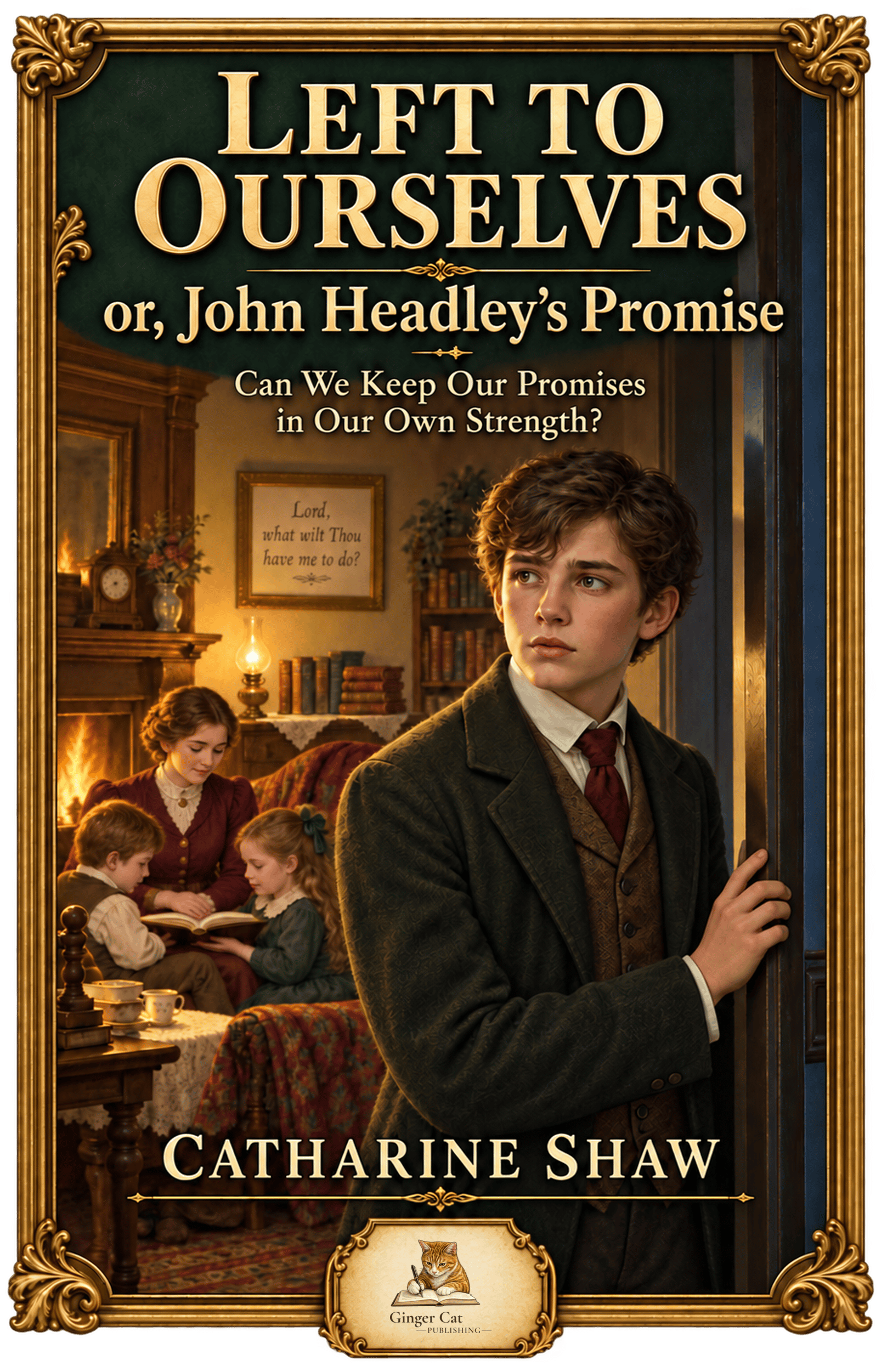
When Mr and Mrs Headley must cross the Atlantic to visit an ailing relative, their five children are left to manage at home under the loving but inexperienced care of seventeen-year-old Agnes. At first the prospect carries a certain excitement. There will be new freedom, new responsibilities and an opportunity to prove that they can be trusted. Yet ordinary family life soon reveals how difficult it is to guide others, govern ourselves and remain patient when good intentions are tested.
Sixteen-year-old John sincerely wants to do what is right. Quick, affectionate and full of energy, he makes a private promise that he will control his temper and seek God’s will in the choices before him. But promises are easier to make than to keep. A strained relationship with his younger brother Hugh, the influence of school companions and the small provocations of a busy household expose the limits of determination alone.
Meanwhile, Agnes must discover the difference between caring for her brothers and sisters and trying to control them. Hugh faces questions of courage, loyalty and peer pressure. Alice and Minnie bring their own mixture of affection, mischief and misunderstanding to the household. Through quarrels, apologies, Christmas preparations, charitable projects and quiet acts of service, the five learn that responsibility is rarely carried through grand gestures. More often, it is revealed in the next word spoken, the unwelcome task accepted or the kindness offered when nobody is watching.
Left to Ourselves; or, John Headley’s Promise is a warm work of Victorian Christian domestic fiction in which faith belongs within the practical life of the family. Catharine Shaw writes with gentle humour about lively young people who interrupt, tease, fail and begin again. Their faults are taken seriously, but never without tenderness or hope.
The novel’s Christian faith is explicit and central. Scripture, prayer, the coloured pages of the Wordless Book and a series of vivid allegories lead the characters beyond confidence in their own goodness. One question gradually becomes a guide for John and the whole household: “Lord, what wilt Thou have me to do?” The answer is found not in stronger self-reliance, but in learning to seek Christ’s help in the ordinary decisions of each day.
First published in 1884, this family story will appeal to readers who enjoy recovered Christian classics, Victorian domestic fiction, sibling relationships and thoughtful accounts of spiritual growth. Its world of shared rooms, school routines, homemade gifts, fireside conversations and small household economies is historically distant, yet its central questions remain familiar. What happens when responsibility arrives before we feel ready? How should we respond when our conduct contradicts our convictions? Can failure teach us to depend more fully upon grace?
This Ginger Cat Publishing edition includes:
- An original Introduction exploring the novel’s central questions
- Historical context for its Victorian household, evangelical faith and social concerns
- An account of Catharine Shaw and her recovered body of Christian fiction
- A modern-reader companion and reflective Points to Ponder
- A carefully prepared, readable presentation of the public-domain text
For readers who value Christian fiction rooted in family life, Left to Ourselves offers an affectionate portrait of young people learning that being left to themselves does not mean being left alone.