
There is something slightly strange happening in modern reading life.
At the exact moment the world has become louder, faster, more distracted, and more relentlessly demanding of our attention, many readers are quietly drifting toward books that seem to do the opposite.
Not louder stories.
Not bigger twists.
Not faster pacing.
Quieter books.
Books where very little “happens” in the modern commercial sense, yet somehow a great deal is felt. Books that observe rather than perform. Books that linger. Books that invite thought instead of competing for attention.
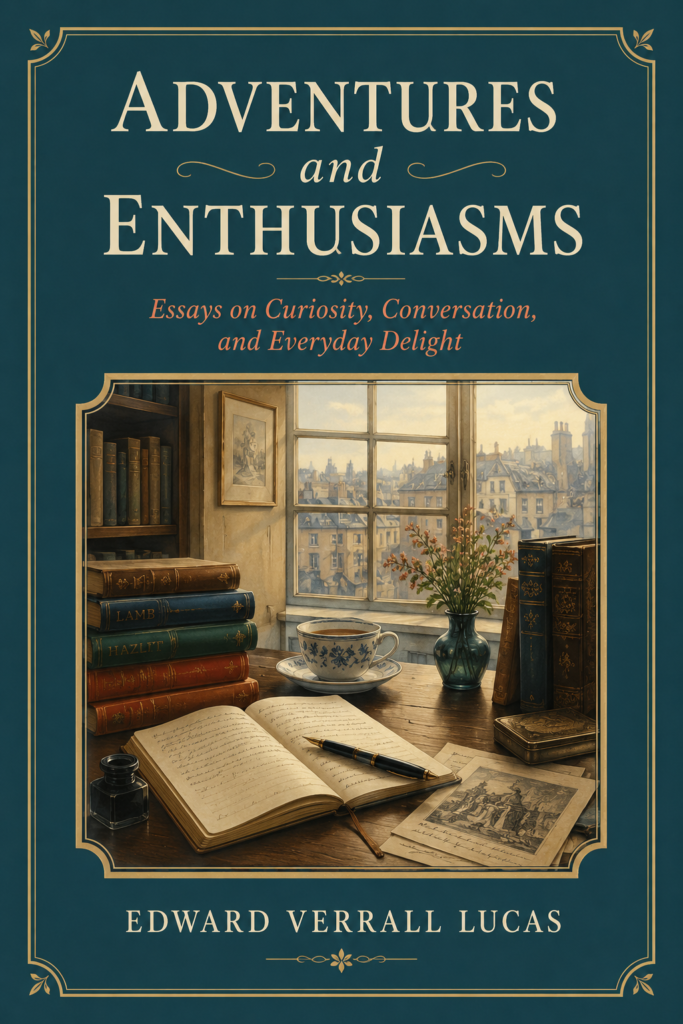
It is one reason readers continue to rediscover overlooked classics like Adventures and Enthusiasms by Edward Verrall Lucas.
At first glance, it may not seem like the kind of book that should survive into the twenty-first century at all. It is reflective, observational, gently humorous, and unconcerned with spectacle. It does not rush. It does not try to overwhelm you with intensity. It notices small things. Everyday things. Human things.
And perhaps that is exactly why books like this matter now more than ever.
This article contains affiliate links to relevant editions on Amazon. As an Amazon Associate, Ginger Cat Publishing may earn from qualifying purchases.
What Is a “Quiet Book”?
A quiet book is not necessarily a boring book, although modern culture sometimes treats those as the same thing.
Quiet books are often driven less by plot than by perception. Their power comes not from constant dramatic escalation, but from atmosphere, observation, emotional honesty, and the gradual accumulation of thought.
They tend to leave room for the reader.
That matters more than it sounds.
Many modern forms of entertainment are designed to eliminate silence, uncertainty, or reflective space. Everything explains itself immediately. Every emotion is underlined. Every moment pushes urgently toward the next.
Quiet literature often does the opposite. It trusts the reader enough to pause.
That pause can feel unfamiliar at first, especially for readers used to highly commercial contemporary pacing. Yet it is often within that slower rhythm that something deeper begins to emerge.
Not adrenaline.
Attention.
Edward Verrall Lucas and the Art of Noticing
Edward Verrall Lucas was enormously popular in his own lifetime, though many modern readers have never heard of him. He wrote essays, travel writing, literary reflections, and gentle observations about ordinary life with a warmth that feels remarkably human even now.
Reading Lucas today can feel oddly calming because he pays attention in a way modern life rarely encourages.
He notices habits, conversations, small absurdities, fleeting moods, changing streets, passing enthusiasms, and the curious contradictions of human behaviour. He writes as someone genuinely interested in people rather than eager to impress them.
That tone feels surprisingly refreshing now.
Modern readers are often exhausted by performance. Online life encourages certainty, speed, outrage, branding, productivity, and endless self-presentation. Even leisure can begin to feel competitive.
Lucas belongs to an older literary tradition that allows room for wandering thought.
Not aimlessness exactly, but attentiveness.
The kind of attentiveness many readers secretly miss.
Why Quiet Literature Feels Different Today
Part of the reason quiet classics feel emotionally powerful now is because the conditions in which we read have changed so dramatically.
Many readers struggle to concentrate for long periods. Notifications interrupt thought constantly. Algorithms reward immediacy rather than reflection. Even reading itself is often discussed in terms of optimisation, speed, or achievement.
How many books this month?
How quickly did you finish it?
Was the pacing good?
Did it “hook” you immediately?
Those are not meaningless questions, but they are modern questions.
Books like Adventures and Enthusiasms operate according to a different rhythm altogether.
They are less interested in capturing attention than in deepening it.
That distinction matters.
A quiet book often asks the reader to slow down enough to notice texture, mood, and thought. In return, it can offer something increasingly rare: mental spaciousness.
Not escapism exactly.
More like relief from constant acceleration.

Are Quiet Books Difficult to Read?
Not necessarily.
In fact, many readers are surprised by how approachable older reflective writing can be once they settle into its rhythm.
The challenge is usually not vocabulary or complexity. It is expectation.
Modern readers are trained to anticipate narrative momentum almost immediately. If a book pauses to observe weather, conversation, routine, personality, or atmosphere, it can initially feel unfamiliar.
Yet once that expectation shifts, quieter literature often becomes deeply immersive.
Readers who enjoy writers such as Jerome K. Jerome, E. B. White, or G. K. Chesterton frequently discover that the pleasure comes less from “what happens next” and more from companionship with the writer’s mind.
That is part of the appeal of Lucas too.
Reading him can feel less like consuming content and more like spending time with someone observant, thoughtful, and quietly amused by life.
The Strange Comfort of Older Reflective Books
Many readers searching for “comfort books” are not actually looking for pure escapism.
Often they are looking for steadiness.
There is a difference.
Quiet classics frequently offer emotional stability because they are rooted in ordinary human experience rather than constant crisis. They pay attention to things that remain recognisable across generations: conversation, weather, friendship, loneliness, curiosity, routine, beauty, irritation, humour, memory.
That continuity can feel reassuring.
A book like Adventures and Enthusiasms reminds readers that human beings have always wrestled with distraction, restlessness, ambition, boredom, fascination, and the search for meaning in ordinary days.
The surroundings change. The technology changes. Human nature often does not.
That is one reason older literature can suddenly feel unexpectedly modern.
Not because it predicts smartphones or social media, but because it understands people.
Why Forgotten Classics Still Matter
There is also something quietly liberating about reading books that exist outside the modern cultural spotlight.
When we pick up universally discussed classics, there can sometimes be a subtle pressure to admire them correctly. Readers may worry about “getting it” or missing some important academic interpretation.
Forgotten or overlooked books often feel more personal.
You encounter them with curiosity rather than obligation.
That discovery process can feel intimate in a lovely way.
You are not reading because an algorithm pushed the book toward you. You are reading because something about it called to you personally. A mood. A title. A recommendation. A passing line.
That slower relationship with literature can become deeply rewarding.
It is one reason many independent publishers and thoughtful readers are increasingly drawn toward rediscovering neglected classics rather than endlessly recycling the same handful of famous works.
There is still so much literary life waiting quietly on forgotten shelves.
Quiet Books and the Recovery of Attention
Perhaps the deepest value of quiet literature today is that it gently retrains attention itself.
Not through force or discipline, but through invitation.
Books like Adventures and Enthusiasms encourage readers to notice again. To observe tone. To sit with thought. To appreciate subtlety. To allow meaning to unfold gradually rather than instantly.
That kind of reading changes the emotional atmosphere of the mind.
It slows internal noise.
It creates space for reflection.
And increasingly, that feels less like an old-fashioned luxury and more like something genuinely necessary.
Not every book needs to be quiet, of course. There is joy in dramatic stories, thrilling plots, and emotionally intense fiction too.
But quiet literature offers a form of nourishment modern culture often neglects.
Stillness.
Attention.
Perspective.
Companionship.
Gentle thoughtfulness.
Those things matter.
Perhaps they always did.
Reading Adventures and Enthusiasms Today
Modern readers approaching Adventures and Enthusiasms for the first time may benefit from treating it less like a plot-driven novel and more like a reflective companion.
It is the sort of book best read slowly. A few chapters at a time. Preferably with tea nearby and nowhere urgent to be.
That may sound romanticised, but rhythm matters with books like this.
They reward receptiveness rather than speed.
Readers interested in reflective classics, observational essays, literary comfort reads, or slower forms of thoughtful writing will likely find far more emotional richness here than they initially expect.
Especially once they stop asking, “What happens next?”
and begin asking,
“What is this book noticing?”
That small shift changes everything.
A Quiet Closing Thought
There is a curious irony in modern reading culture.
Many people feel overwhelmed by noise, speed, distraction, and constant stimulation, yet still instinctively assume that books must compete on those same terms to matter.
Quiet books suggest otherwise.
They remind us that literature does not always need to shout to remain powerful. Sometimes the books that stay with us longest are the ones that speak gently enough for us to hear our own thoughts again.
Perhaps that is part of why readers continue to rediscover works like Adventures and Enthusiasms.
Not because they are fashionable.
But because they offer something modern life increasingly struggles to protect:
the ability to pay calm, humane attention to the world again.
Explore the Ginger Cat Publishing Edition
Ginger Cat Publishing editions are thoughtfully designed for reflective modern reading, combining carefully prepared classic texts with elegant formatting and companion material intended to deepen the reading experience.
Our edition of Adventures and Enthusiasms includes:
- clear, comfortable readability
- thoughtfully balanced formatting
- reflective companion sections
- contextual material for modern readers
- and a premium literary presentation designed to feel calm, timeless, and immersive.
If you would like to explore the edition further, you can view it on Amazon through the Ginger Cat Publishing catalogue.